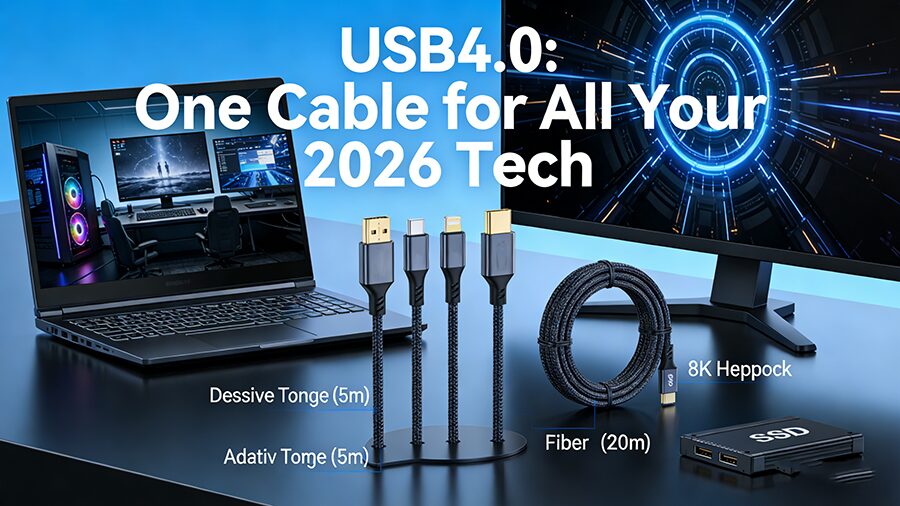
By 2026, USB4.0 cables have become the universal backbone for high-speed data, charging, and video—but not all cables are created equal. With counterfeit “certified” lines flooding the market and new 240W EPR and 80Gbps options, picking the right cable means focusing on four non-negotiable metrics: USB-IF certification, 240W power delivery, 40Gbps (or 80Gbps) speeds, and cable length limits.
1. USB-IF Certification: The Only Way to Guarantee Performance
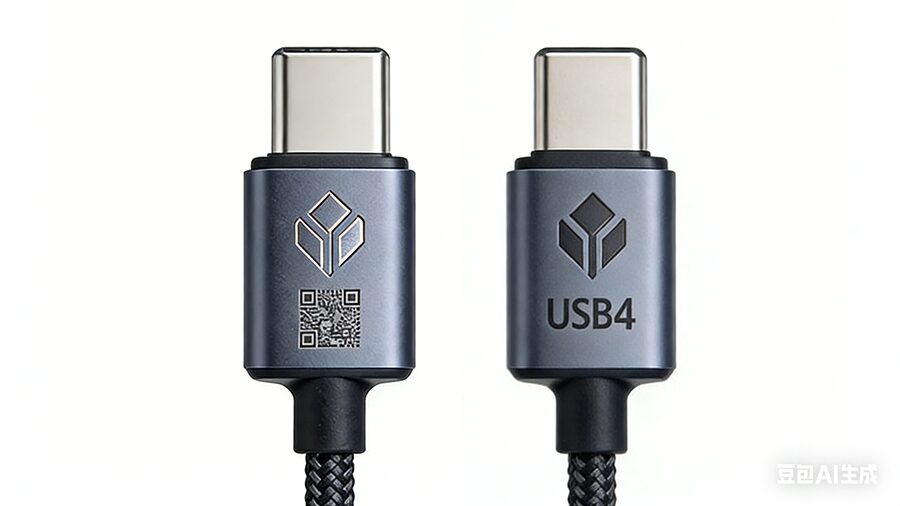
In 2026, counterfeit USB4 cables now mimic official labeling better than ever. USB-IF certification is your only protection against underperforming lines that risk damaging devices. Here’s what to look for:
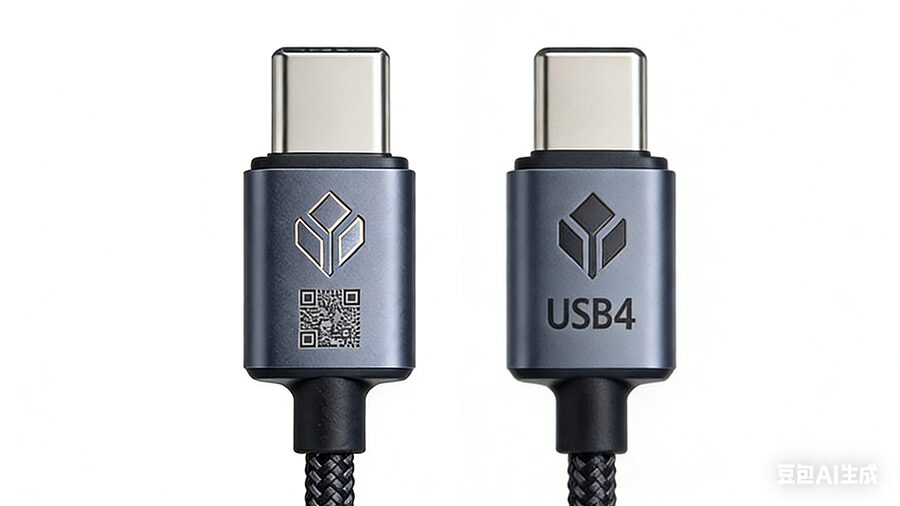
- Official Labeling: Certified cables feature a laser-etched USB-IF logo, scannable QR code (links to USB-IF’s certification database), and clear text like “USB4 40Gbps 240W EPR”.
- Avoid Red Flags: Skip cables labeled “USB4-compatible” or with printed (not etched) logos—90% of these fail USB-IF’s speed and safety tests in 2026 lab reports.
240W Extended Power Range (EPR) is no longer a luxury—it’s a necessity for 2026’s power-hungry gear. Here’s the breakdown:
- 240W Capable: USB4 Gen 3×2 cables support 240W, enough to charge 18-inch gaming laptops (240W), multi-device docks, and even some portable power tools at full speed.
- 100W Limitation: Older USB4 Gen 2×2 cables only deliver 100W, which is insufficient for top-tier 2026 laptops.
- Backward Compatibility: A 240W USB4 cable will safely charge low-power devices (iPhones, tablets) by only delivering the required voltage.
| Device Type | Power Draw | Recommended USB4 Cable |
|---|
| 18-inch Gaming Laptop | 240W | 240W EPR USB4 Gen 3×2 |
| 16-inch MacBook Pro | 140W | 240W EPR USB4 Gen 3×2 |
| iPad Pro 13-inch | 35W | Any certified USB4 |
| Multi-Device Charging Dock | 180W | 240W EPR USB4 Gen 3×2 |
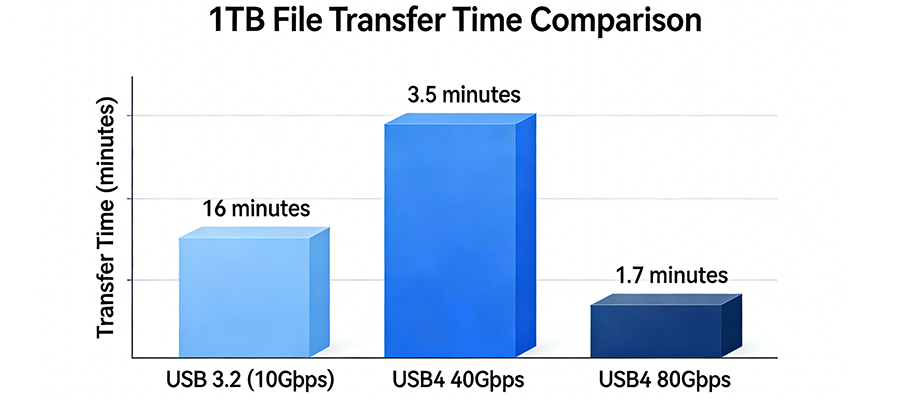
40Gbps is the mainstream USB4 speed in 2026, while 80Gbps caters to extreme power users:
- 40Gbps (USB4 Gen 3×2): Perfect for daily tasks:
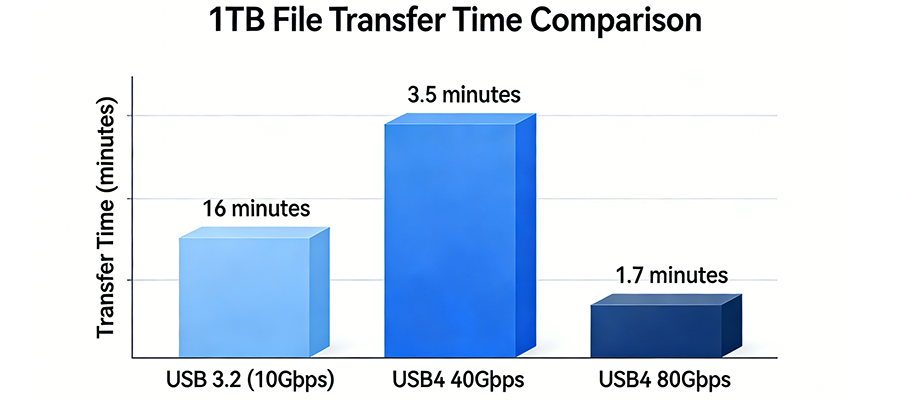
- Transfer a 1TB SSD in ~3.5 minutes (5GB/s real-world speed)
- Stream 4K 60Hz video to external monitors
- 80Gbps (USB4 Gen 4×2): Only needed for:
- 8K 120Hz video output
- PCIe 4.0 external GPU setups
- 2TB SSD transfers in ~1.7 minutes
2026’s improved cable technology has extended maximum lengths, but passive and active cables still serve distinct use cases:
- Passive Copper Cables: No signal boosters, best for short setups (<1m for 40Gbps, <0.5m for 80Gbps). Cheaper, more flexible, and free of EMI interference.
- Active Copper Cables: Built-in signal repeaters, ideal for mid-range lengths (<5m for 40Gbps, <2m for 80Gbps). Good for home office setups (laptop to desk monitor).
- Fiber Optic Cables: Light-based transmission, supports lengths up to 20m+ for 40Gbps and 10m+ for 80Gbps. Perfect for conference rooms or studio setups where copper cables cause interference.
| Cable Type | USB4 40Gbps Max Length | USB4 80Gbps Max Length | Best For |
|---|
| Passive Copper | 1m (3.3ft) | 0.5m (1.6ft) | Desktop setups, quick transfers |
| Active Copper | 5m (16.4ft) | 2m (6.6ft) | Home office, monitor setups |
| Fiber Optic | 20m (65.6ft) | 10m (32.8ft) | Conference rooms, studios |
- Verify USB-IF Certification: Scan the QR code to confirm validity on the USB-IF database.
- Choose 240W EPR: Opt for Gen 3×2 cables unless you only own low-power devices.
- Pick Speed by Need: 40Gbps for most users, 80Gbps only for 8K 120Hz or eGPUs.
- Match Length to Setup: Passive for short distances, active/fiber for longer runs.
- Skip Unlabeled Cables: Avoid any cable without clear “USB4” and speed/power labeling.
A: Yes! Smart power delivery ensures the cable only sends the 18W your iPhone needs, no damage risk.
A: Thunderbolt 4 still has stricter video/PCIe specs, but USB4 supports 240W power delivery (Thunderbolt 4 tops out at 100W until Thunderbolt 5 becomes widely available in late 2026).
A: Only if you’re using 8K 120Hz displays or PCIe 4.0 external GPUs.
40Gbps covers 90% of 2026 user needs.
USB4 cables are the most versatile charging and data solution of 2026, but only certified cables deliver on their promises. Prioritize USB-IF certification, 240W EPR, and match speed/length to your workflow—this will ensure you get the most value out of your cable for years to come.

Comments
Post a Comment