4K/120Hz Gaming Cables: Boost Picture Smoothness Fast
Introduction: Why Your HDMI Cable Makes or Breaks 4K/120Hz Gaming
You’ve invested in a PS5, Xbox Series X, or a high-end 4K/120Hz gaming monitor—now don’t let a subpar cable bottleneck your setup. For 4K/120Hz gameplay, not all HDMI cables are created equal. This guide breaks down why HDMI 2.1 (or higher) is non-negotiable, how bandwidth impacts smoothness, and which cables deliver the best bang for your buck.
Why HDMI 2.1 is the Gold Standard for 4K/120Hz Gaming
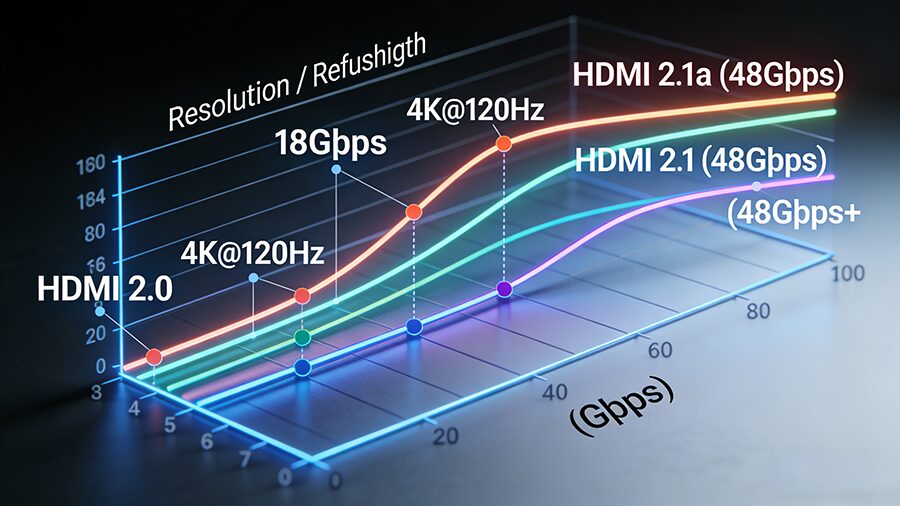
The regular HDMI 2.0 cable (18Gbps bandwidth) only supports 4K@60Hz, while the 48Gbps bandwidth of HDMI 2.1 unlocks 4K@120Hz and 8K@60Hz, and also comes with core gaming functions:
Bandwidth, Refresh Rate, & Gaming Headaches: The Science
| HDMI Version | Bandwidth | Max Resolution/Refresh | Key Limitation for Gamers |
|---|---|---|---|
| HDMI 1.4 | 10.2Gbps | 4K@30Hz | Unplayable for fast-paced games |
| HDMI 2.0 | 18Gbps | 4K@60Hz | No 120Hz/VRR—screen tearing likely |
| HDMI 2.1 | 48Gbps | 4K@120Hz / 8K@60Hz | Unlocks full PS5/Xbox Series X potential |
Final Verdict: Upgrade Your Cable, Unleash Your Setup


Comments
Post a Comment